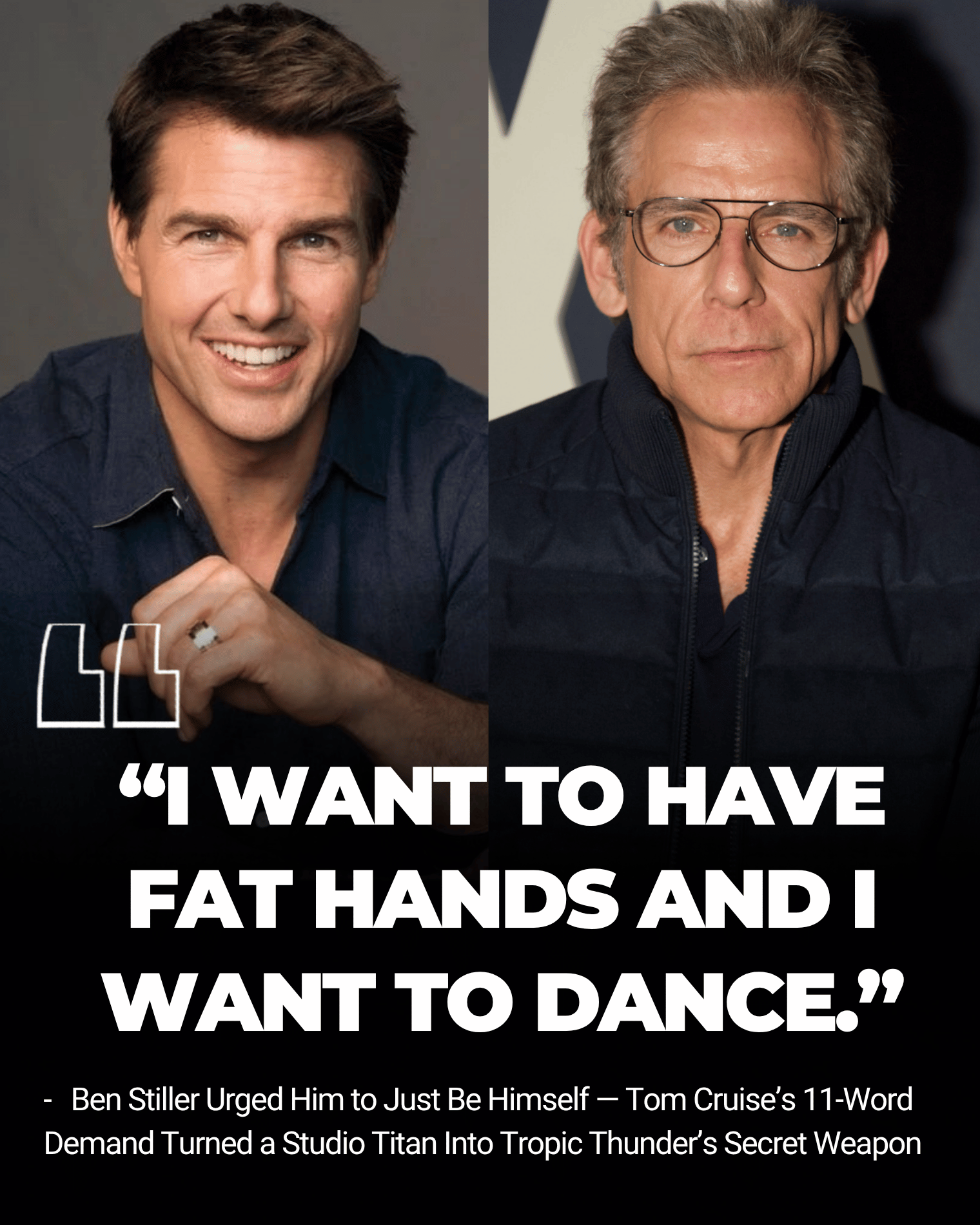
Ben Stiller had a studio executive in mind for Tropic Thunder, but Tom Cruise was apparently not interested in delivering a recognizable version of himself. When Stiller presented the idea, he reportedly suggested Cruise might simply play the character straight, leaning into the intimidating Hollywood-power-player energy audiences already knew.
Cruise had another plan, and it was far more extreme than anyone in the room may have expected. “I want to have fat hands and I want to dance,” he declared, transforming a quick supporting appearance into a full-scale mission of comic destruction.
That single demand became the blueprint for Les Grossman, the furious, foul-mouthed studio boss whose presence hits the movie like a wrecking ball in an expensive suit. Cruise did not merely put on a costume; he buried himself beneath a bald cap, oversized prosthetic hands, extra weight, and a confrontational swagger.
The result was so far removed from Cruise’s polished leading-man image that many viewers initially struggled to believe it was really him. His character stomped, screamed, negotiated, threatened, and danced with the kind of unfiltered chaos that made every moment feel dangerously unpredictable.
Stiller’s original thought had been simple: let Cruise play the executive close to the bone and let the joke unfold naturally. But Cruise apparently believed Les Grossman could not exist unless he became physically outrageous, almost cartoonishly powerful, and completely disconnected from the superstar audiences expected to see.
That instinct turned out to be the secret weapon of the whole film. Tropic Thunder was already packed with huge personalities, elaborate satire, explosive action, and celebrities playing against type, yet Grossman somehow stole scenes from everyone around him.
The comedy worked because Cruise committed without protecting his image, something movie stars rarely risk when their faces are their business cards. Instead of seeking charm, coolness, or applause, he chose sweat, rage, terrible dance moves, and a character who seemed permanently one phone call away from detonating.
Even his look carried the joke: the powerful executive was not sleek, glamorous, or remotely camera-ready in the way Cruise usually appears onscreen. He was deliberately uncomfortable, exaggerated, and bizarrely magnetic, making the character feel like a nightmare Hollywood executive escaped from a locked conference room.
That transformation also gave Stiller’s movie a shock factor it could not have manufactured through ordinary casting. Cruise’s cameo became a surprise not because he appeared, but because he vanished completely beneath the performance and left behind someone viewers could barely recognize.
Les Grossman became one of the film’s most quoted and replayed creations, proving that the biggest laugh often comes when the biggest star refuses to act like one. Cruise’s strange eleven-word demand did not just alter a costume; it changed the scale, tone, and legacy of the cameo forever.