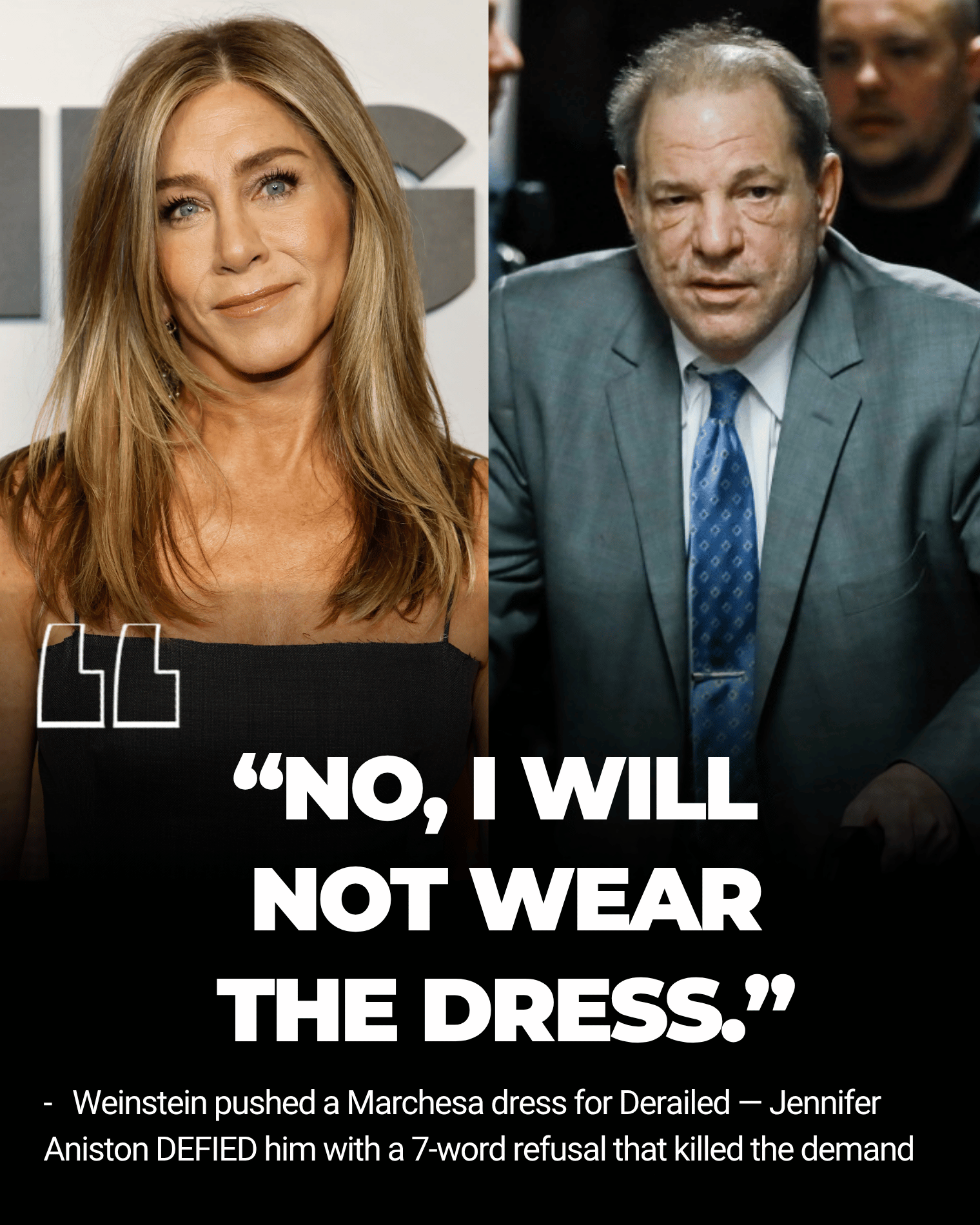
Jennifer Aniston was in London filming the 2005 thriller Derailed when a premiere request reportedly arrived with the full force of old Hollywood expectation. Harvey Weinstein came armed with a Marchesa lookbook, pushing Aniston to select one of the dresses for the film’s red-carpet launch.
The actress was not taken with the designs, and she made clear that the look simply did not match her personal style. But the conversation allegedly shifted when preference became pressure, turning a fashion suggestion into a demand she had no intention of accepting.
Aniston’s response was direct, controlled, and impossible to misread: “No, I will not wear the dress.” Seven words were enough to end the discussion and draw a firm boundary around her own image.
There was no theatrical speech, no elaborate explanation, and no sign that she felt obligated to soften the answer for anyone in the room. That was precisely what made the moment so striking, especially inside an industry where powerful figures often expected compliance.
The exchange has since stood out as a rare public glimpse of Aniston refusing a kind of backstage pressure that was often treated as normal. A premiere gown may sound minor from the outside, but celebrity fashion has long been tangled with influence, access, and who gets to control a star’s appearance.
Marchesa was closely associated with Weinstein’s then-wife, Georgina Chapman, making the request feel larger than a simple wardrobe recommendation. For Aniston, the issue was not whether the dress was beautiful; it was whether someone else could decide what she should wear.
She chose not to let that happen. Her refusal did not need an audience, a press release, or a red-carpet showdown to carry weight because the boundary itself was the message.
At the time, Aniston was already one of the most recognizable women in entertainment, balancing global fame with a career that often invited endless commentary about her looks. Yet even major stars can face private moments where saying no requires more resolve than the public ever sees.
That is why the story still lands with such force. It was not about a dress alone, but about an actress insisting that her body, her presentation, and her choices were not open to negotiation.
The Derailed premiere ultimately belonged to the movie, not to a fashion demand that never made it to the carpet. Aniston’s quiet stand left behind something more memorable than any borrowed gown: a sharply drawn line that refused to move.
In an entertainment world that can confuse access with authority, Jennifer Aniston’s answer remains brutally simple and undeniably powerful. “No, I will not wear the dress” was not a style note; it was a declaration of control.