
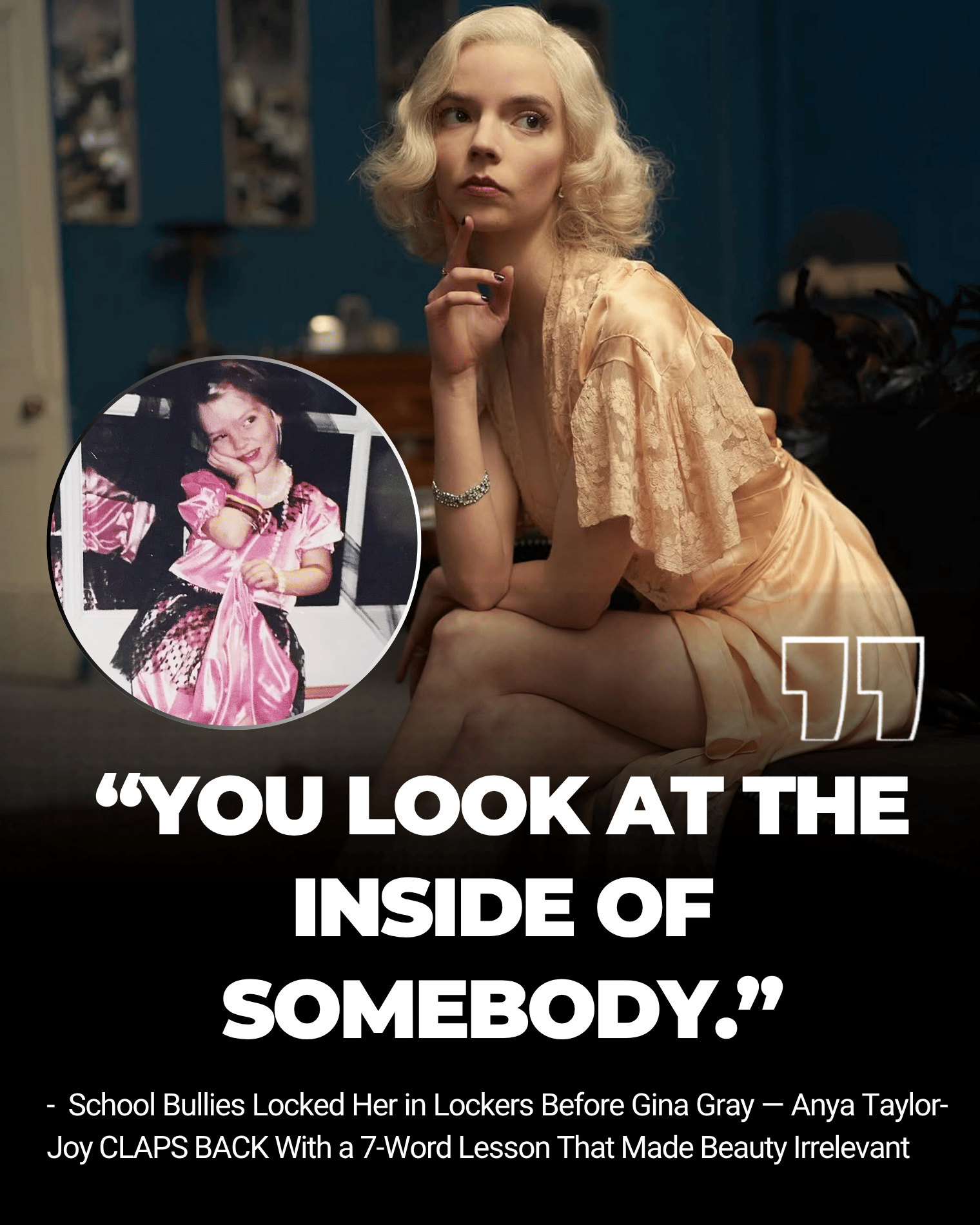
Long before Anya Taylor-Joy became the icy, unshakable Gina Gray or chess prodigy Beth Harmon, she was a young girl facing cruel judgments that cut far deeper than a schoolyard insult.
Speaking on The Drew Barrymore Show in 2022, Taylor-Joy recalled arriving in London after moving from Buenos Aires, unable to speak English and feeling painfully stranded between worlds.
The future star said she did not feel as though she belonged anywhere, a brutal isolation made even worse by classmates who targeted her appearance rather than seeing the person underneath.
The bullying was not merely whispered ridicule or awkward side glances; Taylor-Joy described being locked in lockers, an ugly act meant to make a vulnerable newcomer feel smaller.
For someone later celebrated across red carpets, fashion campaigns, and blockbuster casts, the memory lands with an especially sharp irony: fame did not erase what happened before it.
But Taylor-Joy did not present the story as a plea for sympathy, nor did she allow those cruel moments to define the woman audiences now see commanding every frame.
Instead, she returned to the lesson her mother gave her, a simple response that became stronger than every insult aimed at a girl struggling to find her place.
“You look at the inside of somebody,” Taylor-Joy said, delivering seven words that quietly demolished the entire shallow system her bullies had tried to impose on her.
It was not a flashy revenge speech, and it did not need to be. The power was in its calm refusal to let appearance become the final verdict on anyone’s worth.
That message now feels almost cinematic beside Taylor-Joy’s rise, because the same young woman once made to feel invisible became one of Hollywood’s most distinctive and magnetic performers.
Her performances in Peaky Blinders and The Queen’s Gambit helped turn her into a global phenomenon, yet the emotional force behind her success seems rooted in something more personal.
Taylor-Joy’s story is a reminder that cruelty often attacks whatever makes someone different first, only to discover later that difference was never weakness at all.
The lockers, the loneliness, the language barrier, and the feeling of not fitting in could have become a permanent wound, but she transformed them into perspective instead.
And in seven remarkably gentle words, Anya Taylor-Joy made beauty irrelevant, proving that the most important thing about a person was never what the bullies thought they saw.