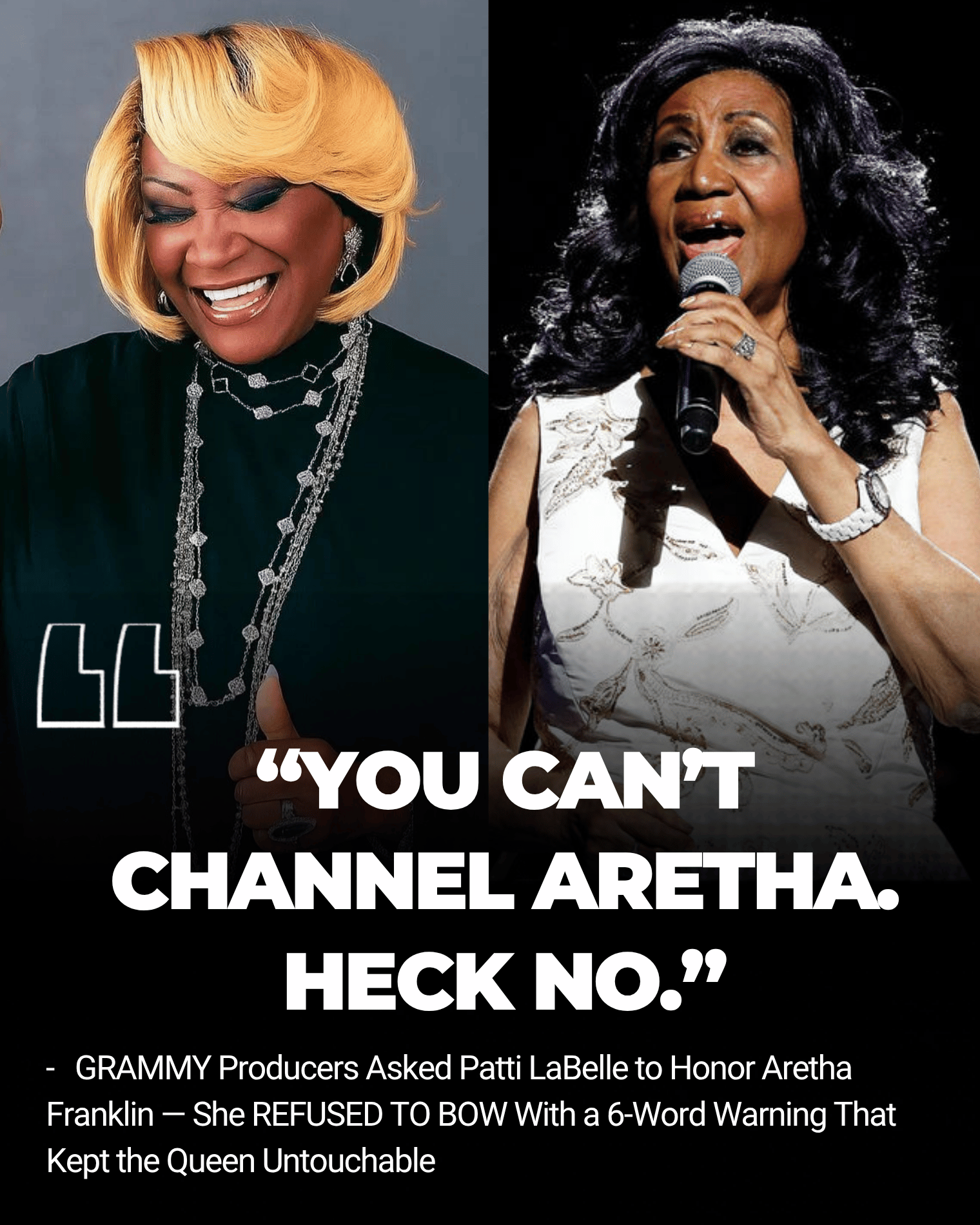
Patti LaBelle did not walk into Aretha! A GRAMMY Celebration For The Queen Of Soul pretending the assignment was simple.
She was there to honor Aretha Franklin, a friend, a rival in greatness, and one of the most impossible voices music ever produced.
The expectation around a tribute like that can get dangerous fast.
Audiences want chills, producers want a moment, and everyone secretly waits for someone to summon the ghost of the legend being honored.
But Patti made one thing brutally clear before the fantasy got out of hand.
“You can’t channel Aretha. Heck no.”
That six-word warning landed like a velvet curtain dropping on any idea of imitation.
Patti was not going to step onstage and pretend she could become the Queen of Soul for one night.
Instead, she performed Franklin’s “Call Me” with the understanding that tribute does not mean possession.
It means respect, memory, love, and enough humility to know where your own voice ends.
That is why the moment carried more weight than a simple performance slot.
Patti LaBelle was not a newcomer nervously borrowing a classic; she was a legend herself, standing before another legend’s towering shadow.
Still, she refused to make the night about proving she could match Aretha.
That restraint was the real flex, because only a secure artist can admit some crowns are not meant to be tried on.
The line also had Patti’s trademark bite.
“Heck no” made the answer funny, but the message underneath was serious enough to shake the room.
Aretha Franklin was not just a catalog of songs.
She was a force, a phrasing, a fire, a church-rooted command that could turn one note into a national emergency.
Patti understood that better than most people ever could.
She knew what it meant to have a voice that carried history, pain, glamour, grit, and survival inside every climb.
So when she joked that performers could only pray Aretha would approve, it did not sound like false modesty.
It sounded like a friend speaking with love, fear, and the kind of respect that refuses to fake closeness.
That is what made her response so moving.
The tribute was not about replacing Aretha Franklin, filling her shoes, or recreating the thunder exactly as it once sounded.
It was about standing near the flame without pretending you created it.
Patti turned the pressure of the night into a friendship lesson, and somehow made humility feel dramatic.
In a music world obsessed with rankings, successors, and who can outsing whom, that was a radical little refusal.
Patti did not compete with Aretha’s memory; she protected it.
The performance mattered, but the warning became the headline because it exposed the emotional rules of the room.
Celebrate the Queen, sing the song, honor the legacy — but do not act like the throne is open.
Patti LaBelle knew the difference between tribute and impersonation.
And with six sharp words, she kept Aretha Franklin exactly where she belonged: untouchable, unmatched, and still ruling the room.